Notes.

Damilare Osibanjo
Writing on building products, compilers, and the infrastructure under them.
Writing
Notes on design, programming languages, and what I learn building systems.
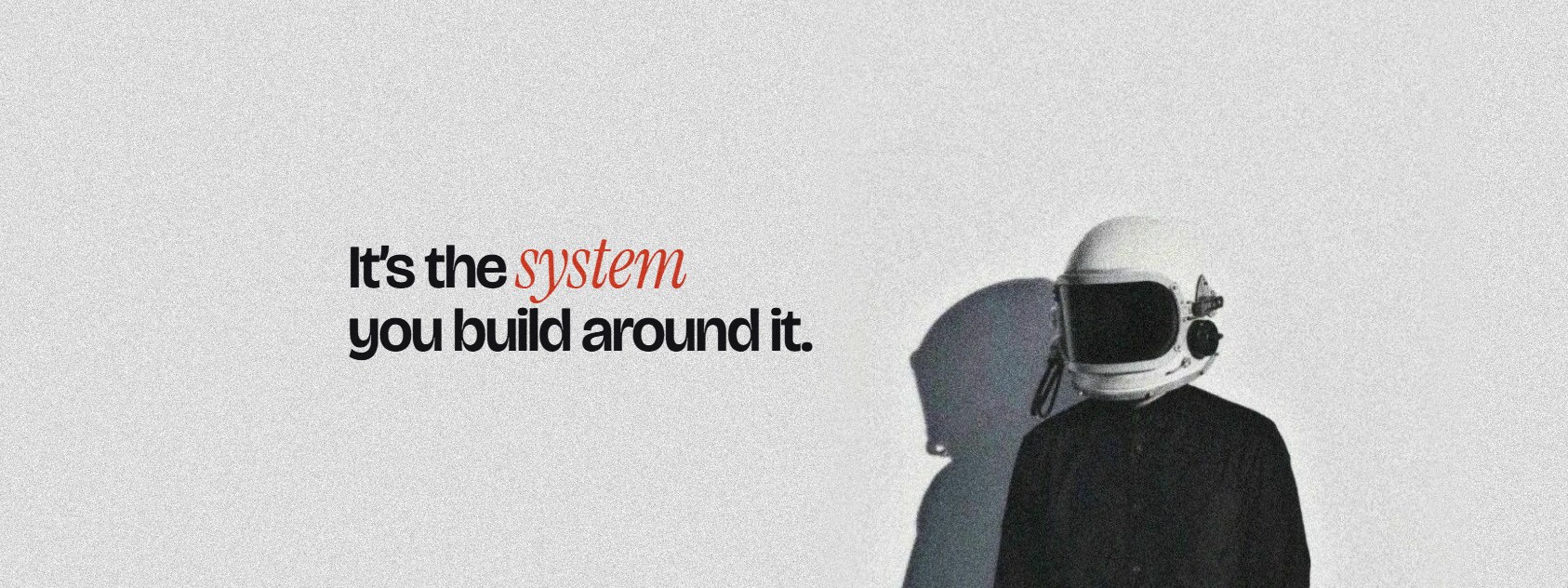
The System of Making Agents Work
The difference between an agent that ships software and one that wastes your time isn't always the model. It's the system you build around it.

Building Track · Part 2
Track Can Now Read Itself
Track v0.7 contains a lexer written in Track. Here is what that first self-hosted component exposed, why the next compiler emits C, and what remains before a reproducible bootstrap.

rebuilding recommender systems: a gnn journey from scratch
How I built a Graph Neural Network recommendation engine from raw tensors and sparse matrices — and the systems/ML insights learned from LightGCN and 9 advanced optimizations.
Building Track · Part 1
Introducing Track: Deterministic Systems Programming with Linear Ownership
The original design case for Track's deterministic ownership model, now updated for its Rust/Cranelift bootstrap and staged path toward self-hosting.

Systems Programming Journey · Part 7
I Was Bored, So I Built a Faster RPC Framework in C
JSON-RPC 2.0 over multiplexed TCP streams. No Protobuf. No codegen. No dependencies. Just C, OpenSSL, and a dumb amount of free time on a Sunday.

The Atomic Arch Supply Chain Attack: How 1,500 AUR Packages Delivered the Miasma Malware
A forensic deep dive into the June 2026 compromise of the Arch User Repository, the Miasma eBPF rootkit, and why open-source trust models will never be the same.

im pivoting to ai and ml
Why a systems engineer spent the last few months building diffusion models from scratch — and what transferred, what didn't, and what's next.

I May Be Too Opinionated (And Unemployed)
A deep technical dive into building Carv, a programming language that compiles to C for ARM Cortex-M. Lexer internals, Pratt parsing, type inference, ownership tracking, C codegen, state-machine async/await, and the 11 bugs I haven't fixed yet.

Application Security · Part 3
How CVE-2026-33017 Turned AI Workflows Into Remote Shells
A deep technical breakdown of the Langflow unauthenticated RCE — how exec() with zero sandboxing allowed attackers to compromise AI pipelines within 20 hours of disclosure.

Application Security · Part 2
XSS in TanStack Query Apps — Testing Methodology, Real CVEs, and Every Fix Layer
A developer-focused breakdown of how Cross-Site Scripting manifests in SPAs using TanStack Query, with a confirmed CVE walkthrough and layered remediation.

Rust Is Opinionated (And Why That Matters for the C Replacement Question)
Rust's strictness is by design. But being a C replacement isn't about syntax — it's about trust, tooling, and domains where C never had a real competitor anyway.
Vercel's Zero Language Is Interesting. It Won't Matter.
Zero is a systems language designed for AI agents. Structured JSON diagnostics, capability-based I/O, sub-10KB binaries. The idea sounds compelling until you look at how agents actually work with compilers today.
Systems Programming Journey · Part 3
I Thought Building a Game Boy Emulator Would Teach Me Zig. It Mostly Taught Me How Little I Knew
Confusion, rewrites, bugs at 2am, and failed ROMs — building a Game Boy emulator from scratch taught me that systems programming is mostly staring at wrong assumptions. Here's what the code actually looks like.

Application Security · Part 1
How Attackers Chain Command Injection, Race Conditions, and Blind RCE — And How You Stop Every Step
A developer-focused breakdown of a complete attack chain, with concrete fixes at each stage.
How to Build Programming Experience When No One Will Hire You
A tactical guide for developers without formal experience: open source contributions, SaaS clones, freelance platforms, and building 'fake but real' projects that actually get you hired.

Systems Programming Journey · Part 2
I Rewrote My OS Kernel in Rust (And the Borrow Checker Saved Me)
Karion-OS started in C. Then a heap allocator bug I couldn't find pushed me to port the whole thing to Rust. Here's what actually happened.

Why Most JavaScript Backends Are Architecturally Weak
Looking beyond framework-first thinking to find real performance.
Systems Programming Journey · Part 1
Building a Lightweight Runtime
Designing systems without external dependencies.